

Forgotten in Life, Remembered in Death
Every night I come across something that makes me really sad or angry, but tonight it sparked my curiosity. While reviewing my usual ten lairs, I came across an entry for Jane Japp. As I looked into her history, I discovered she suffered from St Vitus’ Dance, also known as Sydenham’s chorea.
St Vitus’ Dance, or Sydenham’s chorea, is a neurological condition that typically develops in childhood following an infection caused by Group A beta-hemolytic streptococcus — the same bacterium responsible for rheumatic fever. The hallmark of this condition is involuntary, rapid, and irregular movements of the arms, legs, and facial muscles. It affects girls more commonly than boys and usually appears between the ages of 5 and 15.
Today, St Vitus’ Dance is generally treated with a course of penicillin. However, in the late 1890s, Jane was admitted to the asylum system, where she remained until her death in 1900.
Mary Kelly Lair 5
Message from Frances Dewar
I was amazed and deeply moved to discover the burial place of my 2×great-grandmother, Mary Kelly, in Lair 5.
Mary was one of eight children born to Thomas Harte and Mary Mulhearn around 1817 in New Forrest, Westport, Co. Mayo, Eire, so she was probably around 80 years old when she died.
To find her resting place after all these years is incredibly special to me. I am so grateful to your group for the kindness, care and compassion you show in preserving and sharing these places and the stories connected to them.
Thank you for helping families like mine reconnect with their ancestors.
Gravel Ewing Watson Lair 28
This morning, once again, we have had the privilege of reuniting a family member with their once-lost relative. ❤️
Another family connection rediscovered, and another story brought back to life.
RIP Gravel Ewing Watson — Lair 28.
It is moments like this that remind us why preserving these names, graves and stories matters so much. 🕊️
John Fisher Lair 47
John Fisher was born at Crawford on 10 August 1843, the son of James Fisher and Agnes Warnock.
The Hartwood records give his year of birth as 1844, creating a slight discrepancy with his earlier birth record. However, the combination of his birthplace, parents and later records provides a strong connection between the two records.
Early Life
The 1851 Census records John living with his mother, Agnes, in Crawford. He was recorded as an apprentice shoemaker, giving us an early indication of the trade he would continue throughout his working life.
By 1861, John was still living in Crawford and working as a shoemaker, this time recorded as a lodger.
Later census records place him in Slamannan, Stirlingshire, where he continued to give his birthplace as Crawford and his occupation as a shoemaker.
Marriage and Family
In 1885, John Fisher married Catherine Bannatyne at Kelvin.
The 1891 Census records John living at Kelvin with Catherine. By 1901, Catherine was living with her father and John was no longer present, consistent with his death having occurred before that census.
His Parents
John's father was recorded as James Fisher, while his mother was Agnes Warnock.
Agnes appears to have raised John without James being present in the later records. Unfortunately, the surviving records do not currently tell us what happened to James or provide any further information about his relationship with Agnes and John.
John's early life in Crawford and his occupation as a shoemaker do, however, give us a glimpse into the life he may have led before his later years.
John Fisher — A Life Remembered
From the records, we can establish that John was:
- Born: 10 August 1843, Crawford
- Parents: James Fisher and Agnes Warnock
- Occupation: Shoemaker
- Married: Catherine Bannatyne, 1885, Kelvin
- Recorded residences: Crawford, Slamannan and Kelvin
- Burial: Hartwood Cemetery, Lair 47
There remain unanswered questions about John's father, his later years and the circumstances that brought him to Hartwood. His exact date of birth also remains slightly uncertain, with the Hartwood record giving 1844 while the earlier birth record gives 10 August 1843.
Nevertheless, these records allow us to see John as more than a name in the Hartwood burial register.
He was born in Crawford, raised by Agnes, learned a skilled trade, worked as a shoemaker, married Catherine and lived in several communities before his death.
John Fisher — Lair 47.
His story may still have unanswered questions, but a little more of his life has been restored to the record.
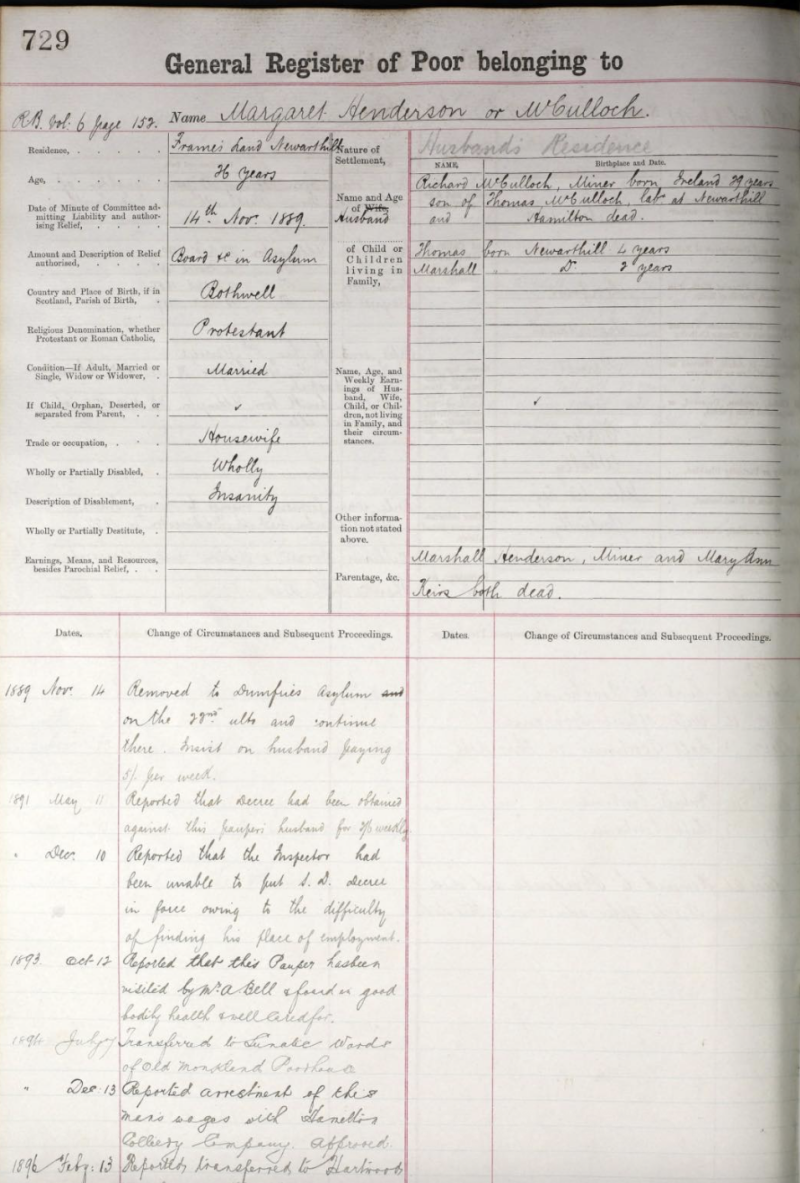
Margaret Henderson McCulloch Lair 74
Another Piece of History Reunited
We were so moved to hear from Steven, who recently discovered that his great-great-grandmother, Margaret Henderson McCulloch is interred within our wee cemetery — resting in lair 74
Margaret was the daughter of Marshall Henderson and Mary Ann Keirs, and her story, like so many others in our care, speaks to a life marked by hardship and strength.
It’s always deeply touching when a family connection is made — when descendants find their roots and a sense of closure, or even pride, in knowing where their ancestors now lie in peace.
This is just another example of how our work at the cemetery continues to bring new meaning and, at times, healing to those searching through the branches of their family tree. A tragic past, perhaps — but with a beautifully poignant ending.
Thank you, Steven, for sharing this with us.
Agnes Wilson Lair 117
From a Number to a Life
A quick search of our records provided the answer.
We found her: Agnes Carmichael Wilson, buried in Lair 117.
From there, her story began to unfold.
Agnes was born around 1830 in County Derry, Ireland, the daughter of James Wilson and Jane King. She married William Wilson, although his presence in the surviving family records is difficult to establish.
In the 1861 Census, Agnes was living at Boghead, near Kirkmuirhill, with her three young children—Mary, Robert and James—all born in Ireland. She had travelled to Scotland with members of her family, including her sister Mary Ann.
Her early years in Lanarkshire appear to have been spent around Kirkmuirhill, where she worked as a “flowerer” or strawberry pollinator, hand-pollinating plants in local greenhouses.
Tracing Agnes is complicated by the inconsistencies in the records. She and her children appear under different surnames, with the children initially recorded as McCurfill, while Agnes described herself as William Wilson's wife. Names, relationships and ages change across the records, making her family difficult to follow.
Her mother, Jane King, also lived nearby with another daughter, Jane, while her brother James eventually married three times and established a large family in Stonehouse.
A Family Life in Carmunnock
Agnes and her sister Mary Ann later moved to Carmunnock, where they worked as domestic servants and farm labourers.
By 1881, the sisters were living together and helping to care for the next generation. Mary had a son before marrying and later had five more children. When she eventually left the household, Agnes and Mary Ann continued caring for her older children.
In 1901, the sisters were still living together, joined by Mary's 22-year-old daughter Jane, who worked locally as a domestic servant. By then, both Agnes and Mary Ann were described as former farmworkers, suggesting that their working lives were largely behind them.
The family had already suffered considerable loss. Their mother and sister had died, while their brother James remained in Stonehouse.
Mary Ann died in 1902, while living with James, and her brother died the following year.
Agnes was becoming increasingly isolated, although her daughter Mary remained nearby with her husband and children in Bridgeton.
Agnes's Final Years
In 1904, at around 74 years of age, Agnes was admitted to Woodilee Asylum before later being transferred to Hartwood.
Her final years are difficult to reconstruct, and we may never know exactly why institutional care became necessary. By then, she had lost her sister, her brother and other close family members. Her daughter Mary was also seriously ill with cancer while caring for her own young children.
Agnes's death certificate does not name a next of kin, and there was no modern system of social care to support families through illness, poverty and old age.
It is possible that Agnes's admission provided some support to the family while Mary received care during her final illness, although we cannot know this for certain.
What we do know is that the timing of their deaths was remarkably close.
Agnes died on 12 October 1906. Her daughter Mary died just eight days later.
Agnes was buried five days after her death, on 17 October 1906, in Lair 117 at Hartwood, alongside Elizabeth White (née Craig).
Her recorded causes of death included arteriosclerosis, emphysema, heart failure and congestion of the lungs.
A Family Scattered Across the World
Mary also died in 1906. Her sons, James and Robert, are more difficult to trace, but many of her children went on to marry and have families of their own.
One of those descendants was Agnes, Mary's eldest daughter and Gordon Mason's grandmother. Family research suggests she went on to have an extraordinary 16 children, many of whom also raised families of their own.
Today, Agnes's descendants are scattered across the world, from Australia to the Americas, although many remain in Scotland. Her family line may now extend to hundreds of descendants.
The woman who once appeared only as a name in institutional records therefore left a remarkable living legacy across generations and continents.
The Mystery of the Records
Agnes's story also highlights the challenges of historical research.
Her age varies between census returns and other documents. The 1861 Census records her as 31, while later records give different ages. If the 1861 entry is correct, she would have been around 76 when she died in 1906.
Her family relationships are similarly inconsistent. Her father is repeatedly identified as James Wilson in census records from 1861 through 1901, while her death certificate gives a different name. Other family records support James Wilson as the husband of Jane King and the father of Agnes and her siblings.
Similar discrepancies appear in the records surrounding her daughter Mary. When Mary died, her eldest daughter registered the death but gave Mary's age as 40—at least eight years younger than it should have been—and described herself as Mary's sister rather than her daughter.
These inconsistencies are frustrating for genealogists, but they also remind us that official records rarely tell the whole story. Names, ages and relationships were sometimes recorded incorrectly or understood differently by those providing the information.
From a Number to a Life
When Gordon first contacted us, Agnes was essentially a missing person in his family history. Her grave could not be located, and much of her later life remained uncertain.
Now we know where she was laid to rest.
More importantly, we know more about the woman behind the record.
Agnes was born in Ireland, crossed the Irish Sea with her family, worked in the fields and greenhouses of Lanarkshire, helped raise children within an extended family, endured the deaths of those close to her, and spent her final years in institutional care.
She was never simply a number in an asylum register or a name on a death certificate.
She was a daughter, sister, mother, grandmother and ancestor.
Thanks to Gordon's persistence, the surviving records and the work of everyone helping to uncover Hartwood's forgotten burials, Agnes is no longer simply a name on a register.
Her grave has been found. Her story has been recovered. And her descendants can find her once again.
That is what it means to go from a number to a life.
Robert Yuill McCulloch Lair 130
Perhaps one of the greatest tragedies of the so-called “golden age” of large public asylums was the number of children who died within their walls. Many children were committed to these institutions, although very few would be considered mentally ill by modern standards.
Robert Yuill McCulloch was born at Barries Land, Newarthill, on 10 January 1884 to Sarah Elizabeth McCulloch and Robert Yuill.
Sarah Elizabeth was born in County Down, Ireland, around 1863. Following the death of her mother in 1875, she moved to Scotland with her family, travelling with her brothers, Richard, born in 1858, and Thomas, born in 1866, and their father, Thomas McCulloch (1823–1898).
By the time Robert was born in 1884, Sarah Elizabeth was living with her father at 115 Cleland Road, Barries Land, and her young son was living with her.
Sarah Elizabeth took Robert Yuill, the father of her illegitimate son, to court seeking a paternity decree and financial support for the child. The proceedings eventually came to an end when Sarah Elizabeth married Robert Henderson in June 1891. The couple went on to have a large family of their own.
Robert was sent to Larbert, to what was then known as the Scottish National Institution for Education of Imbecile Children. He was there by around April 1891, when he was just seven years old. The terminology used by the institution reflects the language of the period and is very different from the language that would be used today.
Around the same time, Robert's father, Robert Yuill, attempted to have his maintenance payments stopped following Sarah Elizabeth's marriage.
On 19 May 1899, Robert was certified as insane and transferred to Lanark District Asylum at Hartwood, where he would remain until his death.
The surviving assessment of Robert is difficult to read from a 21st-century perspective. It contains the terminology and descriptions used by medical professionals at the time, including references to an “idiotic look” and observations that Robert drooled, did not answer questions and laughed. The report also states that he worried the other children and disturbed them during the night.
These descriptions give us a glimpse into how people with intellectual disabilities were viewed and treated by institutions in the late 19th century, but they tell us very little about Robert himself as a person or how he experienced his life.
By May 1899, Sarah Elizabeth and Robert Henderson had six children: Sarah Elizabeth, born in 1891; Marshall, born in 1893; Mary Ann, born in 1894; Jane, born in 1896; Margaret, who was born and died in 1898; and Jemima, born in 1899. By the time Robert Yuill McCulloch died in 1907, there were four more children in the family.
Robert's stepfather, Robert Henderson (1865–1940), appears to have been quite a character in his own right. Although born in Scotland, both of his parents were Irish and had moved to Scotland sometime before 1856. Robert Henderson eventually became the owner of his own mine in the area.
There was also a family connection between the Henderson and McCulloch families. Robert Henderson's older sister, Margaret Thomson, married Sarah Elizabeth's brother, Richard McCulloch, in Newarthill in 1882.
Margaret McCulloch was also connected to Robert Yuill McCulloch's story. Her name appears in the Hartwood archives, where her death is recorded in 1903. This means that Robert and his aunt Margaret were patients at Hartwood during the same period.
Robert's story sits within a much wider and darker history.
Children with epilepsy, developmental disabilities and other conditions were often institutionalised because families or authorities believed they could not be cared for at home. Once inside these institutions, children could be subjected to many of the same harsh treatments and restrictions as adults. Involuntary confinement and the stigma surrounding intellectual disability could also leave children isolated from their families and with little outside oversight of their treatment.
Given these circumstances, it is perhaps unsurprising that children experienced high mortality rates in large state-run institutions. Some deaths may have resulted from underlying conditions, including epilepsy, or from infections and other illnesses that were poorly understood or treated. Others may have been connected to the harsh conditions, neglect, abuse or psychological distress experienced within institutional life. Without detailed records, however, it is impossible to know the cause of every death.
The growing influence of eugenics in the early 20th century added another disturbing dimension. People with intellectual disabilities and others considered “undesirable” by society were increasingly subjected to policies and practices intended to segregate them from the wider population.
For Robert, the records give us only fragments of a life that began with a family, continued through childhood in Larbert, and then moved to Hartwood, where he spent his final years.
What we can say with certainty is that Robert was institutionalised as a child and remained within institutional care for much of his short life. We cannot know exactly what he felt, feared, hoped for or understood about the circumstances in which he found himself. Nor can we know how much of his recorded behaviour reflected his underlying condition and how much may have been shaped by years of institutionalisation.
That uncertainty makes the surviving records all the more poignant.
Robert died at Hartwood in 1907, aged just 23. His story might easily have disappeared into the thousands of institutional records created during this period, remembered only as a name, a case file and a grave.
Research by Liz Smullen helped uncover his story, including the location of his burial in Lair 130. The discovery has allowed Robert to be remembered not simply as a former patient of Hartwood, but as a son, a stepson, a brother, an uncle and a member of a family who lived and died in the communities around Newarthill and Hartwood.
We can never know what Robert's life might have been had he grown up in a different time, in a society that understood intellectual disability differently and offered families greater support.
But we can remember him.
A marker has now been placed at his grave so that Robert Yuill McCulloch will no longer be forgotten. His story is a reminder of the many children whose lives were hidden away within institutions, and of the importance of continuing to uncover their names, their histories and their humanity.
Thankfully, society has changed enormously since Robert's lifetime. Yet remembering stories such as his reminds us that acceptance, dignity and compassion should never be taken for granted.
Margaret Henderson Lair 74
Margaret's story is particularly heartbreaking.
According to records found through Scotland's People, Margaret married Robert McCulloch in April 1882. In June of the same year she gave birth to a son who lived for only around 12 hours. The child was not named.
Margaret went on to have two sons who survived, Thomas, born in 1884, and Marshall, born in 1887. Both boys survived into adulthood and went on to have families of their own.
In June 1889, Margaret gave birth to twins, Mary Ann and John. Both babies died shortly after birth, having been born prematurely.
Following the deaths of her children, Margaret's mental health deteriorated significantly. She was admitted to Dumfries Asylum when she was only 26 years old. She later moved to Old Monklands and eventually to Hartwood in 1894.
The surviving medical records provide a disturbing insight into how mental illness was understood and treated at the time. A description of a doctor's visit in 1889 uses terminology that would be considered deeply offensive today, including the word "lunatic". The same record describes Margaret unexpectedly bursting into tears.
Other records describe her experiencing paranoia and believing that her neighbours were poisoning her. There are also references to the use of chloroform to keep her asleep.
Statements from members of her family describe Margaret as talking nonsense, singing hymns and being unable to be left alone. One particularly distressing entry records Margaret repeatedly exclaiming, "Kill Him".
These records should be understood within the medical and social context of the late 19th century. They document the observations and interpretations of doctors and relatives rather than providing Margaret's own account of what she was experiencing.
Margaret remained in institutional care and eventually died at Hartwood in 1903. Her recorded cause of death was phthisis, a historical term commonly used for pulmonary tuberculosis, although the exact medical circumstances would require further examination of her death and asylum records.
The connection between Margaret and Robert Yuill McCulloch makes their stories particularly poignant. Margaret was Robert's aunt, and both were patients at Hartwood during the same period.
Their stories show how closely intertwined the lives of families in the mining communities of Lanarkshire could be. They also demonstrate how illness, childbirth, poverty, family relationships and institutional care could shape the lives of several generations.
Margaret's surviving family continued to carry her name forward. Her son Thomas, born in 1884, later named his youngest daughter Margaret Henderson McCulloch (1926–2015).
Through that name, Margaret McCulloch continued to be remembered by later generations of her family.
The stories of Robert Yuill McCulloch and Margaret McCulloch are difficult to uncover, but they are important. The surviving records contain language and descriptions that can be distressing to read today. They reflect the medical understanding and social attitudes of the period rather than the language we would use now.
Behind those institutional records were two people, surrounded by families, marriages, children and communities. Robert was a son, stepson, brother and nephew. Margaret was a wife, mother, sister and aunt.
Their records allow their lives to be traced, but they also remind us that the people recorded in these institutions were much more than the diagnoses and descriptions written about them.
Message: Alison Marshall
Hi, I have been researching my family tree for sometime and found Robert Yuill McCulloch (130) & Margaret Henderson (74) on your website.
I have a lot of information about both as Margaret was Robert's aunt.
Her story is sad as it seems she had a mental breakdown after the death of her twins.
Robert lived with his mother for years until she gave him up due to the level of care and her other children.
I am happy to share what I have found
Agnes Buchan Lair 146
Agnes Buchan born most likely Senegal West Africa, in 1872 as her father Andrew Buchan born 1840 glasgow was the vice consul there in the 1870-80s.
Andrew lived with his wife Margaret Horn, born in Glasgow circa 1839 to John Horn and Janet McQueen.
Both Andrew and his wife were from moderate backgrounds and did quite well in life as Andrew’s father was a coal miner and Margaret’s father was a draper.
the couple had a few children which included Martha and Janet both these girls were boarded out when the rest of the family went to Senegal to represent the British Government.
there were also other siblings, Sarah Margaret, Eliza and a brother called James but the family including Agnes, came home to settle in the Gorbals in the 1880s but sadly the mother, margaret, died in 1890 and Agnes ended up eventually in the poorhouse then Hartwood .
Sadly, Agnes died there in 1903 aged 31, her sisters margaret and janet died in 1903 and 1909 both aged 35 none of them married.
I must mention that Agnes had a middle name which was Annie and she was commonly known as.
Her father went from being a miner’s son in Glasgow to becoming the British Vice-Consul in Senegal, at the heart of West Africa. Although slavery had been abolished, it still existed in many forms, with people working under contracts on plantations producing rubber, coffee and cotton. Agnes must have witnessed some remarkable sights during her childhood, while also enjoying a privileged life as the daughter of a British Vice-Consul. Yet, despite such an unusual upbringing, she eventually ended up in the Monklands Poorhouse.
We should also remember how different Senegal was then compared with today. Modern Senegal has a population nearly three times that of Scotland, and Agnes would have been brought up in Dakar, the capital.
John Williamson aka Jock O'Law Lair 159
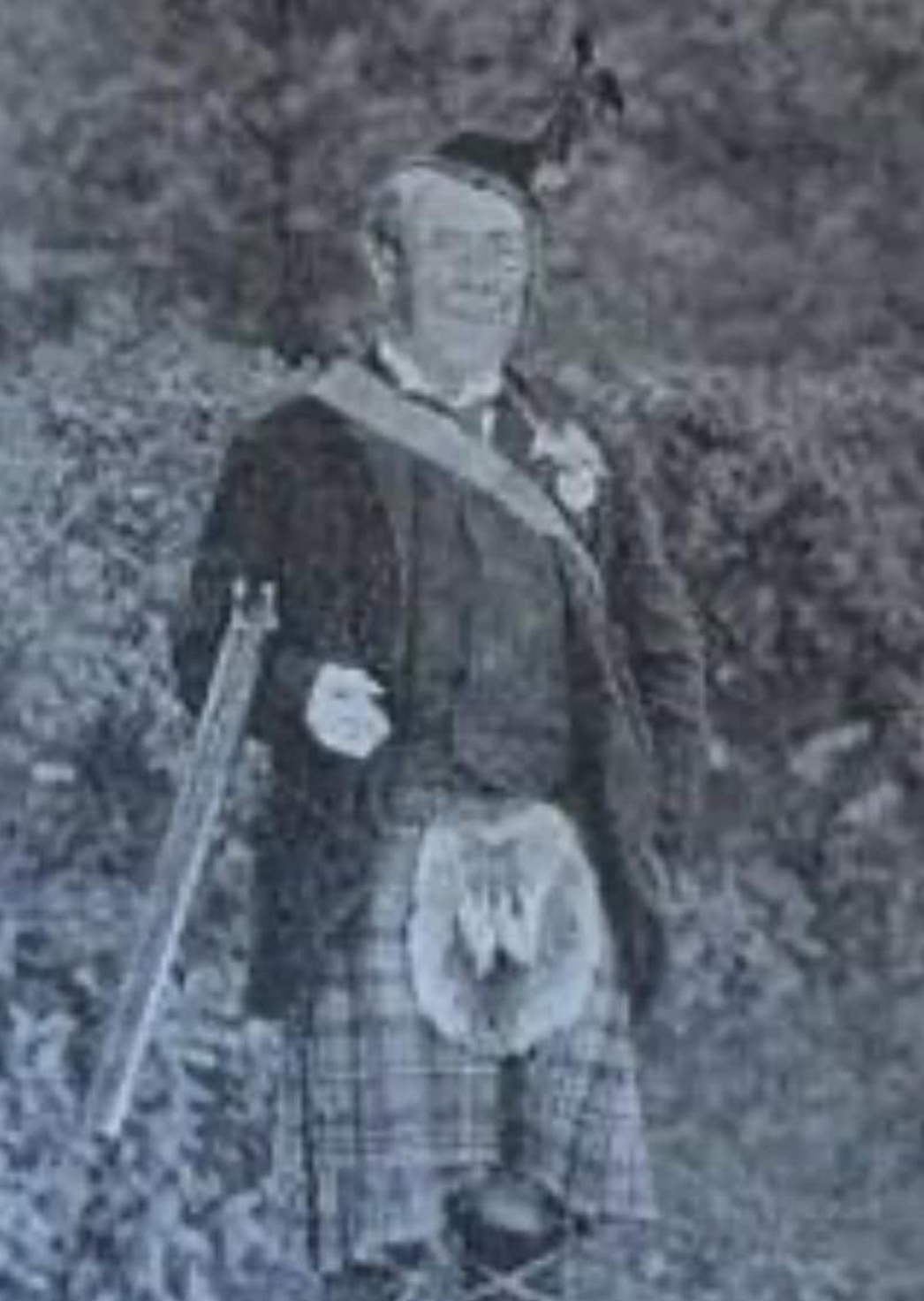
Extracted from Historic Hamilton written by Garry L McCallum
During the late 1890s John Williamson, or better known to locals as “Sir John Williamson”, “Jock O the Law” or “Jock o the Lum” was in his day, one of Hamilton’s best well known characters. Jock led a simple life and probably had mental health issues that would have been with him for a long time.
The poor man was usually a figure of fun and sometimes the kids in Hamilton were cruel to him. He was deluded and he thought that he was a Knight that rode a horse at the celebrations in Glasgow for King Edward’s visit after the coronation,but he was unseated when boys pricked his horse.
Jock was born at Kilbrachan in Renfrewshire to his parents John & Janet and he travelled around with his parents. In 1861 jock was living at Factory Close in Lochwinnoch with his parents and later in 1881 he was living at New Kilpatrick and his father was working as a collier.
In 1901 he was lodging at the Lodging House at 10 Grammar School Square. He was earning a living as a Hawker. Jock was also known to be sometimes cruel, however this could have been down to his mental health issues.
Jock was admitted to Hartwood Hospital at some point between 1902 & 1910, and he died on the 4th June 1910. On his Burial Record from Hartwood Hospital it stated Pauper Lunatic, this was the stated term back then. The cause of his death was pneumonia.
On his death cert there were no parents registered, so this would indicate that poor Jock was taken to the asylum by someone that never knew him or where he came from. The death cert did however state that Jock was married! Sadly I have not come across a marriage cert for him.
Jock O the LumJohn’s death certificate.
During a previous post that I have done on “Jock o the Lum” some our readers have told us that their parents were still saying to their kids, “Who do you think I am? Jock O the Lum!” Indicating that they were not daft, this was still a well used phrase being said in the 60s.
Jock was such a character that even seven years after his death his antics were still spoken about and people still thought of him.
The following report was printed in the Hamilton Advertiser on the 19 May 1917 and it read the following:
JOCK THE LUM
Ever ready with excuses, Johnnie had always something to advance in mitigation of the charge preferred against him. Was it drunkenness, then he would plead a “bash-on the head and bad cold, and he usually urged doctors orders for what he took in the way of liquor, only he did not wait until he got home before taking his prescription.
He had one memorable encounter with the late Bailie MacHale with smiling countenance and characteristic eloquence, Johnnie lined up before the Magistrate to answer to a charge of being drunk and incapable.
Without waiting for his offence to be stated to the Court, began -“Well, sir” – But he was cut short with the query, “Are yon guilty or not guilty?” Nothing disconcerted, Johnnie replied—” Yes, I’m guilty; but. see, yer honour, I tak’ convulsions, and whiles ye wad think I had drink when I had scarcely ony. I even tak’ the fits in the hoose.” And you take them in the street times,” quoth the Magistrate, sympathetically. Oh, yes.” acknowledged Johnnie, with alacrity. And you occasionally require a barrow.” was the next comment of his Honour, whereat Johnnie became suspicious and launched into a story about a crowd of boys “grupping his barrow.” and putting him “in a great state.”
Even after being fined, and failing in his attempt to strike a bargain with the Court for the procuring of the money, Johnnie always remained bland and smiling, and in leaving the dock never failed to give a gracious salaam to all and sundry.
Johnnie, who latterly became known as ” Sir John.” has long since gone to his rest. Peace to his ashes. (Ref: Hamilton Advertiser 19/05/1917)
In my eyes, I see to this day quite a few Jock o the lum’s still alive and walking about Hamilton, RIP John Williamson.
Mary Jane Dotson Lair 171
Mary Jane Dotson was born on 24 June 1843 to William Gold and Mary Jane Wade.
She married William Dotson in 1863 in Clones, County Monaghan, and together they had numerous children.
This information corrects the details previously recorded for Mary Jane Dotson. Her death certificate states that she was 59 years old at the time of her death.
Message: Elizabeth Grieve née Dobson
I’m contacting you with regards to lair 171 Mary Jane Dotson. Mary Jane was born in 24 June 1843 to William Gold and Mary Jane Wade. She married in 1863 in Clones county Monaghan to William Dotson and had numerous children. I come from their eldest son Edward who changed his surname to Dobson from whom I descend from. I thought I’d send you this corrected information as her death certificate says she was 59 years old at death. Can I actually visit the cemetery
The Bairns Lair 183 & 306
It seemed like any other evening, with people liking and commenting on the FoHPC page, until around 8:30 pm, when Tom shared a little more about Baby Moses, resting in Lair 306.
Her name was Martha, and she had a brother, Philip — someone we had no knowledge of until now.
We had been unaware of any other infants buried in the cemetery, as no other records appeared to mention babies. But how quickly that changed with just the click of a button and a little data sorting.
Philip was found in Lair 183. There was no indication in the records that he was a child, other than the fact that there were three people recorded in the lair.
Martha and Philip’s mum is not buried with her children, and at present, we have no record of where she is.
But I hope, wherever she may be, she knows that we will look after her babies as best we can. ❤️
Another little story uncovered. Another family connection brought back into the light.
Rest peacefully, Martha and Philip. 🕊️
I want to share something I hope you’ll never have to know: how a heart can break and tears can flow endlessly. They lost their babies, you see — angels in their eyes. God chose to take their hand one day and lead them to the skies. But please, do not forget their child. They were a person too, and forever they will live inside of me and you.
So, please don’t ever say that time will heal their pain, because not even time can bring them back again. Just tell them they are happy in that land far above, snugged in an angel’s wings and wrapped in a mother’s love.
Jane Muir Symington Lair 203
Shared by her great-grandson, John
One of the most meaningful parts of our work is helping people reconnect with their ancestors—bringing stories long hidden in the shadows back into the light.
Earlier today, I received a message from John, who had been searching for his great-grandmother, Jane Muir Symington. He knew she had died at Hartwood Asylum on 22 March 1914, but had never been able to discover where she was buried.
Around two years ago, he visited the cemetery, unsure of her plot. With a quick search, we were able to locate her final resting place: Lair 203, Hartwood Cemetery.
John shared:
“Her name was Jane Muir Symington—though she was sometimes known as Jean or Jeanie. She has an interesting, if tragic, back story.
She was a single mother in 1888, at a time when that was socially unacceptable. I suspect this contributed to her being in Hartwood. She had been there from as early as 1901—very sad, really.
My mother was 93 when she first told me the story. When she was 14, her Granny sent her alone on a train to Allanton every week, carrying a white bowl of food because her mother didn’t like hospital meals. From there, she walked to the clock tower at Hartwood, where her mum was a voluntary patient for what they called ‘her nerves.’
I tried to find out more about my gran and the shock treatment she received.
Jane’s story had, for many years, been forgotten—her memory quietly erased by her family. John has made it his mission to restore her name, her story and her dignity.
Jane was born in Lesmahagow in 1865, the daughter of shoemaker John Symington and Janet Forrest. By the 1871 census, she was living with her maternal grandfather, Samuel Forrest, and throughout her youth she was often recorded using the Forrest surname.
On 14 October 1888, aged 22, Jane gave birth to a daughter, Janet Forrest Symington, in Abbeygreen, Lesmahagow. No father was named on the birth certificate, although a court decree the following year identified Andrew Brown, a labourer from Stockbriggs Farm, as the father.
By 1901, Jane was recorded as a patient at Hartwood, aged 36 and described as a former domestic servant.
She died there on 22 March 1914, aged just 50. Her cause of death was recorded as Morbus Cordis (unknown). She was buried in an unmarked grave in Lair 203.
Whether Jane remained at Hartwood throughout those years, or was discharged and later readmitted, remains unclear.
What became of her daughter, Janet?
Jane’s daughter, Janet Forrest Symington, was raised by her grandfather—or possibly great-grandfather, as the records vary.
In 1908, Janet married William Shearer, a coal miner from Hamilton. In 1913, they had a daughter, Peggy Shearer.
Tragedy struck again in November 1916, when William was reported missing and later presumed killed during the Battle of the Somme.
In 1922, Janet remarried Alexander Barr, John’s grandfather.
This story reminds us how easily people—especially women—could be forgotten or erased by the society they lived in.
But names matter.
Jane Muir Symington is no longer just a name in a record or an unmarked grave. Through John’s love and determination, her story has been uncovered, her life remembered, and her dignity restored.
We are honoured to help paint a fuller picture of those buried at Hartwood and, with each rediscovered life, help descendants reconnect with the past.
Augustus Laurel Oliphant Lair 235
Born 11th February 1859 Bloomsbury, London, England.
Baptism 31st March 1859 in the Parish of St Giles in the field, Middlesex.
Parents Ferrand Augustus Oliphant Army Contractor & Mary A Elkington.
Augustus had five siblings:
Ellen Harriet Oliphant born 1858 Pancreas, London.
Samuel Oliphant born 1860 London.
Edith Helen Oliphant born 1861 Kensington, London.
Charles Campbell Oliphant born 1864 Middlesex, London.
Herbert Colin Oliphant born 1867 England.
The 1881 Census Shows Augustus living at 2 Mansion Street Camberwell, Lambeth, London with his mother and his sister Edith Helen. A visitor is recorded on the return one Chas. Wells visitor 48-year-old musician (violin) from Soho.
Augustus married Emily Kate Longley on the 29th of January 1887, Holy Trinity, Stroud Green, England. They had two children:
Doris Mary Oliphant Born 12th September 1889, Streatham, Surrey, England.
Eric Ferrand Oliphant Born 2nd October 1891, Streatham, Surrey, England.
The 1891 Census shows Augustus (Insurance Manager) living in Streatham with his Wife, Daughter, two servants & a nurse maid.
Augustus was admitted to Hartwood Asylum as a Private Lunatic in 1900
He died in Hartwood at 1;20 pm on March 10th, 1902, & was buried on the 13th of March 1902. In Lair 235 Hartwood Cemetery. His usual place of residence was The Heugh Bothwell.
Probate: Oliphant Augustus Laurel of the Lanark District Asylum Hartwood N.B .died 10th March 1902. Administration London 3rd April to Emily Oliphant widow Effects £915
Isabella Ferguson or Plenderleith Lair 246
I am hoping that you will be able to tell me if my Great, Great Grandmother, Isabella Ferguson or Plenderleith, is buried in Hartwood Graveyard. Scotlands People’s records (per attachment) shows that she died January 24, 1917 at Hartwood “Asylum” Shotts.
Any information that you can provide would be most appreciated.
Regards,
Heather AlexanderCanada
Roseanne McIver Lowe Lair 247
A Mother’s Story of Loss
Also known as Rose Ann McKeever, McKever, McIver or Low
Admitted to Hartwood Asylum in 1910
As told by Janice McCrossan
Roseanne’s life was marked by hardship, loss and extraordinary strength in the face of unimaginable sorrow.
She married William Lowe in 1888 in Saltcoats, Ayrshire, and together they raised six sons: Robert, James, William, Thomas, Charles and Michael.
Like so many mothers of her generation, Roseanne watched the First World War tear through her family. Her sons served their country, while she endured the uncertainty and fear that came with each passing day.
Tragically, two of her sons, Thomas and Charles, never came home. Her son William served in the Royal Navy, while the family faced the devastating reality of war and separation.
In 1910, before the war began, Roseanne was admitted to Hartwood Asylum. The records may never tell us exactly what she was experiencing or what led to her admission. We can only imagine the weight of the circumstances surrounding her life.
What we do know is that she endured the loss of two sons and the separation from others who were serving—a burden no mother should have had to carry.
In Honour of Her Sons
Private Charles Lowe
Service No. S/4126
9th Battalion, Black Watch (Royal Highlanders)
Killed in action: 25 September 1915
Commemorated at: Loos Memorial, France
Panel: 78–83
Private Thomas Lowe
Service No. S/10484
1st Battalion, Black Watch (Royal Highlanders)
Killed in action: 18 November 1917
Commemorated at: Tyne Cot Memorial, Belgium
Panel: 94–96
Roseanne’s story is not simply one of loss. It is also a reminder of the thousands of mothers whose suffering was rarely spoken about or recorded.
Behind every name in the records was a person with a family, a history and people who loved them.
Roseanne carried the grief of losing her sons during one of the darkest periods in history. More than a century later, we can finally give her story the recognition it deserves.
Rest in peace, Roseanne, Charles and Thomas.
You are remembered. 🕊️
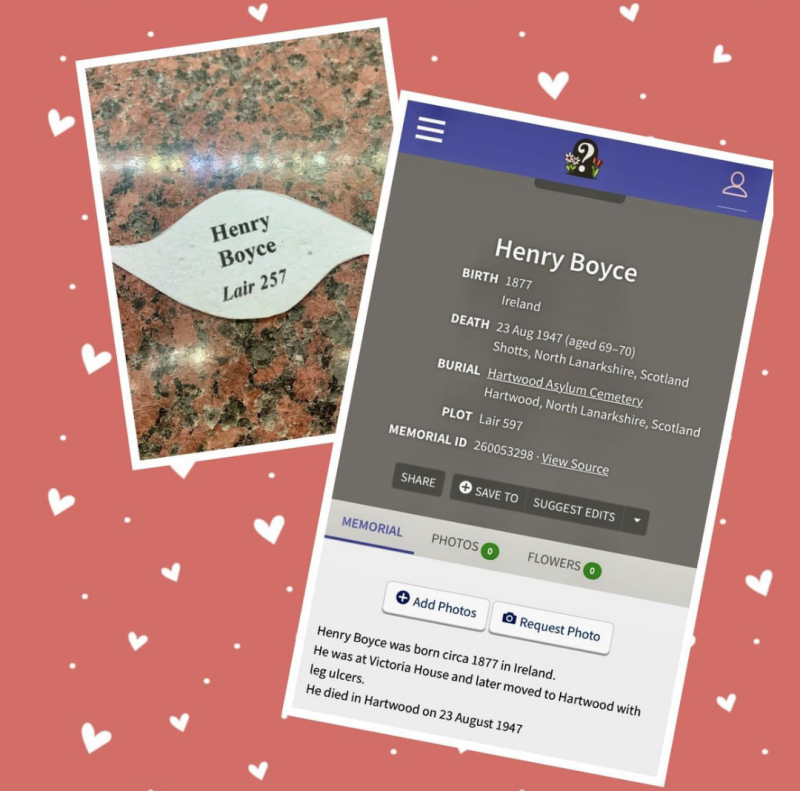
Henry Boyce Lair 257
Robert Bell Lair 271
Robert Bell was born around 1868 in Glasgow to Robert Bell, a blacksmith, and Elizabeth Bell (née Bell), who married in Bridgeton in 1863.
He appears to have grown up in a large family, with at least six sisters—Jessie (b. 1864), Annie (b. 1866), Jane (b. 1870), Elizabeth (b. 1871), Margaret (b. 1874) and Agnes (b. 1883)—and a brother, James (b. 1876). Another brother may have died young, as he does not appear in later census records.
The 1881 census also records a James Bell, born around 1860, living with the family. He may have been an uncle who was raised alongside the children, although this cannot be confirmed.
The Bell family moved several times around Glasgow and Rutherglen:
- 1871: 366 London Road, Calton, Glasgow
- 1881: 11 Green Wynd, Rutherglen
- 1891: 31 Burnhill Street, Rutherglen
- 1901 & 1911: 34 Mill Street, Rutherglen
By 1911, Robert, aged 43, was living with his 68-year-old father. The 1915 Valuation Roll confirms his father was still the tenant at Mill Street. Robert’s mother had disappeared from the census records after 1891, suggesting she may have died sometime during the 1890s.
Robert lived with significant physical and cognitive disabilities. The census described him as “not strong enough for work” in 1881, “born paralysed in lower limbs” in 1891, and “feeble-minded” in 1901. Despite these challenges, he remained within the family home throughout his life, seemingly supported by his parents.
It is possible that Robert was admitted to Hartwood Hospital after he was left without family support.
He died at Hartwood on 5 April 1918, aged around 50, and was buried three days later, on 8 April 1918, in Lair 271.
Today, we can at least give Robert the recognition that his final resting place was once an unmarked part of a much larger story.
Margaret Logan Lair 278
Lainey McCulloch :Good evening all, thank you for accepting me in. I have been researching my mums side of the family and found that my second great aunt Margaret Logan is buried in the cemetery (she passed away at Hartwood in 1918 after being moved to Hartwood from Perth). Thank you so much for the hard work you have done. I’m so very grateful to you for making sure she wasn’t forgotten!
Hortense Vervoort Lair 289
We recently received a heartfelt message from a relative eager to share their family story. We always encourage this—after all, it’s their story to tell, and no permission is needed from us.
I truly admire the work you do. My 2nd great-grandmother was admitted to Hartwood, resting in Lair 289. Unfortunately, her voice was never truly heard, but I’m grateful for the chance to share her story.
Hortense Vervoort was born Horthansia Vervoort on 23 January 1892 to Joannes Baptista Vervoort and Joanne Maria Mertens. She was the youngest of six siblings. Her father died when she was only seven years old. Hortense grew up on a farm in Antwerp, Belgium. (A photo of Hortense accompanies this story.)
She married Julius Van Megroot on 21 December 1913, and we believe she was happy at first.
When Germany invaded Belgium in 1914, Hortense became a Belgian refugee and fled from Antwerp to Glasgow. She arrived in Glasgow in March 1915, seven months pregnant and alone. Julius was a Belgian soldier fighting in France. Hortense had no family in Glasgow and spoke very little English.
She gave birth to a baby boy, Albert, on 9 June 1915.
Shortly after, on 22 June 1915, Hortense was admitted to Renfrew District Asylum. Her diagnosis was recorded as "person of unsound mind." On 6 January 1916, she was transferred to Lanark District Asylum (Hartwood), where she remained until her death on 7 March 1919.
According to her admission notes, she was considered suicidal and dangerous to others, and it was believed she would remain in the asylum indefinitely.
During her stay, Julius never visited her. The only visitors she had were representatives from Belgian charities who offered comfort and financial assistance. It is understood that Hortense suffered from postnatal depression and desperately needed a friend.
Reports noted that she showed little or no interest in her infant, refused nourishment, and was anxious about her husband, who was fighting at the front. There were rumors that Julius was having an affair with a German woman, leading Hortense to believe she had been abandoned.
While at the asylum, Hortense was described as extremely emotional, often crying out and weeping hysterically. Unable to understand her condition, doctors confined her to bed for days at a time, during which she developed several bedsores.
After nearly three years in the asylum, Hortense died on 7 March 1919 from disseminated tuberculosis.
Following her death, Julius and their son Albert—who would have been nearly four years old—emigrated to Canada.
With kind regards,
Charlotte

William McLaren Lair 324
I am grateful to the Friends of Hartwood Pauper Cemetery for guidance while searching for records of William McLaren who died at Hartwood Asylum in 1921. William is buried in Lair 324 in Friends of Hartwood Pauper Cemetery. Working with Karen Gallagher, Archives Assistant at North Lanarkshire Heritage Centre has provided access to records of William's admissions to Hartwood. Sadly he was forcibly admitted to asylums on 4 occasions, two of which were at Hartwood. The final admission was in 1904 resulting from a transfer from Hawkhead Asylum. William remained at Hartwood until 1921 when he passed due to Tuberculosis, undoubtedly he became infected while a patient. He carried diagnosis of Melancholia and Delusional Insanity but he was a family member, a man and a Scotsman.
I do hope William benefitted from some the descriptions I have read when Hartwood had beautiful spacious grounds and wonderful soothing musical programs. Visits from family loved ones may have been permitted and beneficial. Would feel even more for him if I suspected he was held only in custodial care to protect the general public.
Thanks to all who have worked to clear and repair the Friends Cemetery, identify Lair numbers and install occupant directory boards as well as provide a beautiful resting place for those we wish to remember and honor.
We are grateful for the efforts of all involved. William is my wife's great grandfather and we plan to visit this coming September.
Bob Crum
Matthew Campbell Lair 397
Kathleen Osborn
I are visiting Scotland in September (from Western Australia) and we want to visit Hartwood Paupers Cemetery as my grandmother's father (Lair 397) is there. This has been confirmed by NLHC (Karen so very helpful).
Sadly, I don't have his story to share

P
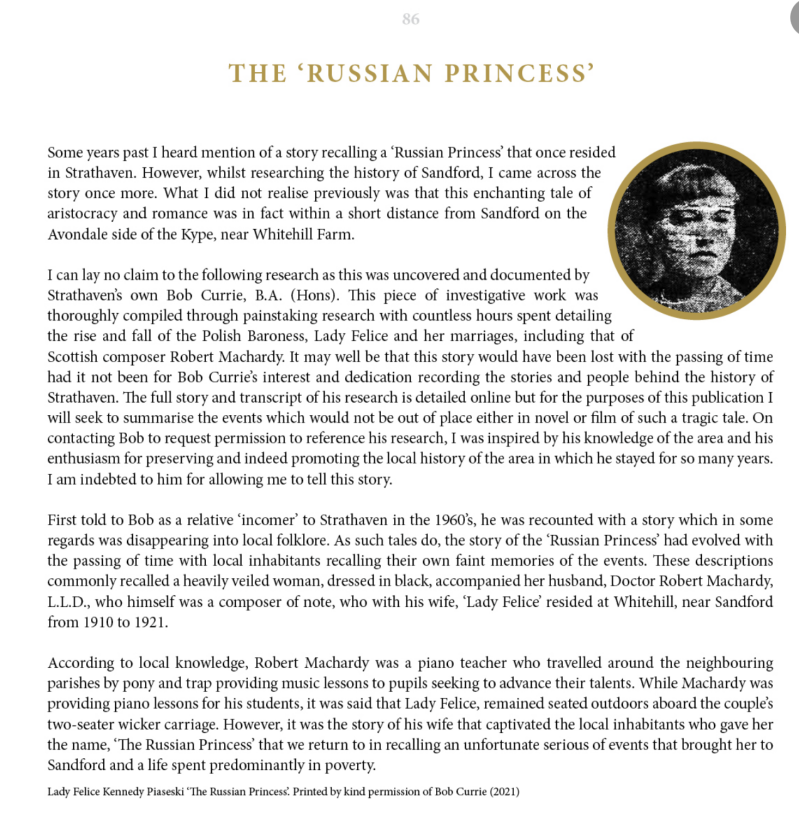
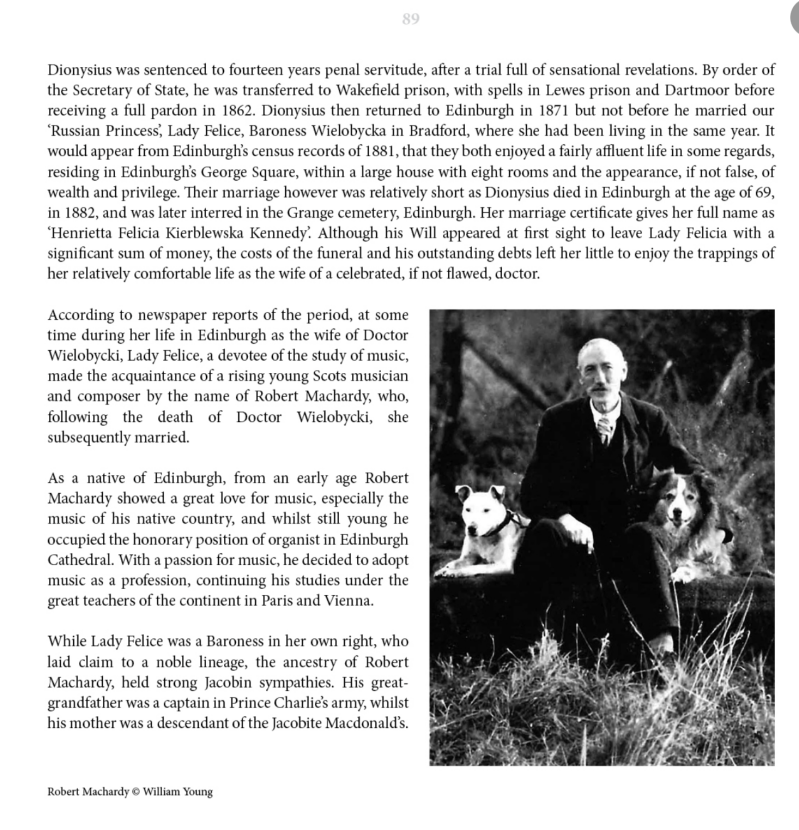
Our Polish Princess Lair 185
A tale of riches to rags


John Watson Lair 501
I recently learned that my GG Granfather is buried here. His name was John Watson and I believe his plot number is 501.
We have been searching for his death record for so many years and just recently found it. This has been a family mystery for many, many years!
Emily Watson
Edward Murphy Lair 508
Today, Veronica visited the cemetery to find the final resting place of her maternal great-grandfather, Edward Murphy.
Edward was admitted to Hartwood Hospital in 1911, where he spent the remainder of his life under the diagnosis of what was then described as ‘religious mania’. He died in 1939 and was buried in the hospital cemetery.
Veronica was shocked to discover that her great-grandfather had spent almost his entire adult life at Hartwood. The family had been told that he had simply left, and no one knew he had ever been a patient there, let alone that he was buried in the cemetery.
Her search led her to the Heritage Centre in Motherwell, where she found Edward’s details recorded in a large, leather-bound ‘lunatic asylum book’. Reading his story was devastating. He was described as ‘an agreeable, pleasant fellow’, yet he was not allowed out because he repeatedly asked to go home and was considered an ‘escape risk’.
Veronica’s mum later shared that Edward had asked every day if he could go home, right up until the day he died.
But yesterday, after all those years, Edward finally had visitors.
Veronica and her daughter visited his grave, bringing rocks and shells collected from beaches across Scotland—places Edward never had the chance to see.
After decades of being lost to his family’s history, Edward has been found, remembered and brought home in a different way. ❤️
Charles McCluskey – Lair 515
We were recently contacted by Dean, who asked if his wife, Maria, could visit Hartwood Cemetery after they discovered that her great-grandfather, Charles McCluskey, was buried there.
Like many families who reach out to us, they had grown up hearing fragments of conversations—snippets whispered between adults, not meant for young ears, but remembered nonetheless. As the years passed, those fragments became clues, and eventually, a story began to emerge.
As is often the case, the historical records contained inaccuracies. A name may have been misheard, a detail misunderstood, or a simple clerical error may have crept into the records. Charles was originally believed to have been born in Mid Calder, but through Dean’s research and our own verification, we established that he was born in Cadder, near Kirkintilloch. We were also able to confirm his correct date of birth and his wife’s maiden name.
On Thursday, Dean and Maria visited Hartwood, where we were able to pinpoint Charles’s final resting place.
They brought a ranunculus plant in a pot and placed small butterfly decorations around his lair—a simple but deeply meaningful tribute.
As they stood there, another thought became difficult to ignore: they were likely the first members of Charles’s family to visit his grave in more than a century.
Remembering the People Behind the Records
It is important to remember the world Charles lived in.
Mental health was poorly understood, and stigma was widespread. Families were often left struggling to understand what had happened to their loved ones when they entered an asylum. There was little support, and even less understanding. For some families, silence became a way of coping with something they simply didn't know how to talk about.
But silence never meant the absence of love.
Dean expressed something that will resonate with many families searching for relatives who disappeared into the records:
“I do think we are lucky to find him, as many of my family ended up in common ground or paupers' graves and their exact location cannot be pinpointed. I found it surprising and comforting that the people at Hartwood took the time to number the graves and keep such detailed records.”
And thankfully, Charles’s story did not end with his burial.
Their journey didn’t end there…
Hugh Sharp – Lair 169
Dean’s continued research uncovered even more of the family’s hidden history.
He discovered that Charles had a cousin, Hugh Sharp, who is also buried at Hartwood, in Lair 169. Hugh was born on 12 December 1872 in Cadder, the son of Patrick Sharp and Jane Gallacher, and died on 1 May 1911, just a year before Charles.
Dean also discovered that Charles’s brother, Edward, had been a resident at Hartwood. Edward had admitted himself and was considered “sane” during his time there. Years later, Edward’s 14-year-old son was nearly admitted following intervention by the Tollcross Police, although his admission was ultimately refused.
These discoveries raise an intriguing question for us:
Just how many cousins, siblings and other family connections are quietly woven among the 1,255 graves at Hartwood?
Every time a family begins to dig a little deeper, another connection emerges—and with it, another story waiting to be told.
Rest in peace, Charles and Hugh.
You are remembered not simply as names or numbers in a register, but as people with families, connections and stories that deserve to be brought back into the light.
Annie Armitage Lair 535
I have looked at the list of the unfortunate "lunatic paupers" buried in the cemetery and the name of my great aunt Annie Armitage who was buried in lair 535 in 1941, age 83.
She shares a grave with 67 year old Jessie Dyett.
My great aunt was placed in Hartwood when it opened in 1895 and stayed there until she died.
I knew nothing of her (she was a sister of my great grandmother Helen Armitage who married James Cassidy).
Annie's family history and mental records both from Crichton Asylum and then Hartwood.
I need to put them together.
My wife and I I have twice visited the cemetery during Covid before the improvements to the site and the discovery of who is buried where.
I would like to revisit the site and would be happy to meet you by mutual arrangement at the cemetery. One of my sons who lives in Edinburgh is interested in coming too.
David Cooney
Isabella McDonald Lair 547
I reached out as I found out through “ Find a Grave” that a distant ancestor of mine Isa McDonald is in lair Lair 547.
John McDonald - Andover

Theresa Roddis Lair 584
Theresa Roddis Born 2nd April 1891 at 195 Preston Street Bridgeton Glasgow. Parents were James Roddis occupation Tinsmith Journeyman and Isabella Roddis maiden surname McDonald Housewife.
Theresa had two Siblings: James Roddis born 1893 & Charles Duncan Roddis born 1895
In 1918 Teresa was residing in 61 Granville Street with her parents. Her brothers were listed at this address but both serving in the Forces.
Teresa was admitted to Hartwood Asylum Date unknown occupation Postal Clerkess & Telegraphist, Marital status single. Usual residence 61 Granville Street Glasgow. She died in Hartwood Asylum on the 7th of April 1946 @ 12 noon age 55 years. Her parents were both deceased.
Teresa was laid to rest in Lair 584 alongside Lily Ewing.
Lily was born 4th April 1900 at 70 Omoa Square West Dist. Of Shotts. Her Parents were John Ewing occupation Steelworker & Marion Ewing maiden Surname Paton, Housewife. Lily had 5 older siblings: Agnes born 1888, Alexander1891, Annie 1893, William 1896, John 1896.
Date of Admission Unknown her usual address was Motherwell. Marital Status Single. Lily died in Hartwood Asylum @ 0:10 pm on March 22nd, 1946, age 45 years.
Catherine Crerar Lair 612
One of Only Seven Headstones. One Heartbreaking Story.
Among the 1,255 souls laid to rest at Hartwood, only seven graves are known to have surviving headstones.
One of them belongs to Catherine Thomson Crerar.
Her story came to us from Cathy and Darren Crerar in Victoria, Australia, Catherine’s descendants, who contacted us after discovering that she was buried in Lair 612.
“You can all be very proud of the work you are doing with the cemetery. We came across your group while Googling during COVID and were so excited to see the photos. We visited Hartwood in 2018 but sadly missed the cemetery—only to later discover that Darren’s great-grandmother, Catherine Thomson Crerar, is buried there in Lair 612 with a headstone.”
Catherine’s name also appears on the family memorial in Carnwath, but much of her story had remained unknown, even within her own family.
For many years, the family believed Catherine had died while her children were still young. In reality, she had spent many years at Hartwood Hospital.
Her youngest son, John Weir Crerar, was told that his mother had died when he was a boy. It was only during a visit in 1950, shortly after Catherine had died, that he discovered the truth.
The simple headstone at Lair 612 bears only the words:
“In Memory Of.”
The family believe it was placed by Catherine’s sons, John and Daniel, as her husband, also Daniel, had died in 1946.
Cathy wrote:
“I believe Catherine found some contentment in her situation and think she would have been very proud of her sons and all the following generations. Imagining the grave with the snowdrops blooming as you say sounds very comforting and lovely.”
Following Catherine’s Footsteps
When Cathy and Darren travelled to Scotland in 2018, they made a remarkable journey through the places connected with Catherine and her family.
They visited Westsidewood, where Catherine was born and where the family lived and worked. Today, it remains a beautiful stately home.
They also visited Cleugh Farm at Wilsontown, now home to The Bothy, and Newmains Cottage, Catherine’s last known home before her long stay at Hartwood. The cottage still stands and is now known as Dippoolbank, while the former Newmains House and Farm are now largely ruins.
The gardens at Dippoolbank have previously taken part in the Scottish Open Gardens scheme. The family have even considered bringing something from Dippoolbank back to Scotland in the future to plant in the gardens at Hartwood—a beautiful living connection between Catherine's former home and her final resting place.
A Connection That Remained
Cathy and Darren were able to read Catherine’s patient records at Motherwell. They found that the early entries were detailed, but gradually became less frequent as the years passed.
They understood from the records that Catherine did not appear to return home, although the gaps in documentation during the two World Wars leave some uncertainty.
One small but powerful connection survives in the records.
In 1916, during the First World War, Catherine’s eldest son Daniel listed “Catherine of Newmains Cottage” as his next of kin on his military application.
Despite the years of separation, he still identified his mother through the place she had once called home.
Cathy and Darren reflected:
“It is important to talk freely and be open about our past and share the knowledge to understand and begin the healing where it is needed.”
Their words feel particularly important when we consider Catherine's story.
Mental health was poorly understood, stigma was widespread, and families were often left with little knowledge of what happened to loved ones who entered institutional care. The records can tell us where someone was, but they rarely tell us what they felt, what they hoped for, or how much they were missed.
Catherine's headstone is therefore much more than a marker.
It is evidence that someone remembered her.
We are incredibly grateful to Cathy and Darren for sharing their family's story and allowing us to bring Catherine's life back into the light.
Her story was hidden for generations.
Now, she is remembered.
And perhaps one day, beneath her headstone at Lair 612, snowdrops will bloom—a small, living reminder of a woman whose family has travelled across generations and continents to find her again.

Isabella Brown
To The Hartwood Paupers Cemetery Group: Attached are some documents of my Grandfather’s Younger Sister, Isabella Brown. Her Birth Cert. Death Cert. and Death Record. My Grandfather was James Wilson Brown Born Airdrie Rawyards March 1877, died here in Edmonton Alberta Canada, May 1962. Aunty Isabella passed away @ Hartwood Hospital 04 Sept. 1909. This is my connection to Hartwood Hospital. I have blocked out Addresses for Privacy and Security. Please use for your History Archives and Galleries.
Regards,
Norman Brown

Agnes Morton
I'm working on my family tree, and lo and behold, did I not go and find a relative today who died in Hartwood!! Her name was Agnes Morton, married name Adams and she was born in 1845 and died in Hartwood on March 30th, 1912.
The only information I have about her birthplace is "Midlothian", but I'm not sure if that's right. A lot of my family came from Fauldhouse and birthplaces are shown as Breich or West Calder. I believe that must have been the registration office at the time, but it's often cited as being in Midlothian - maybe that was the case at the time - but both are in West Lothian now.
I've found her on the Find My Past site which doesn't show me how we're related, but it's on my mother's side - that's about all I know for now. And I could find out the relationship if I had her on My Heritage, but I haven't got that far back yet.
I was wondering if you have any information on Agnes in your own records? Thank you xx
Bobbi Jeal